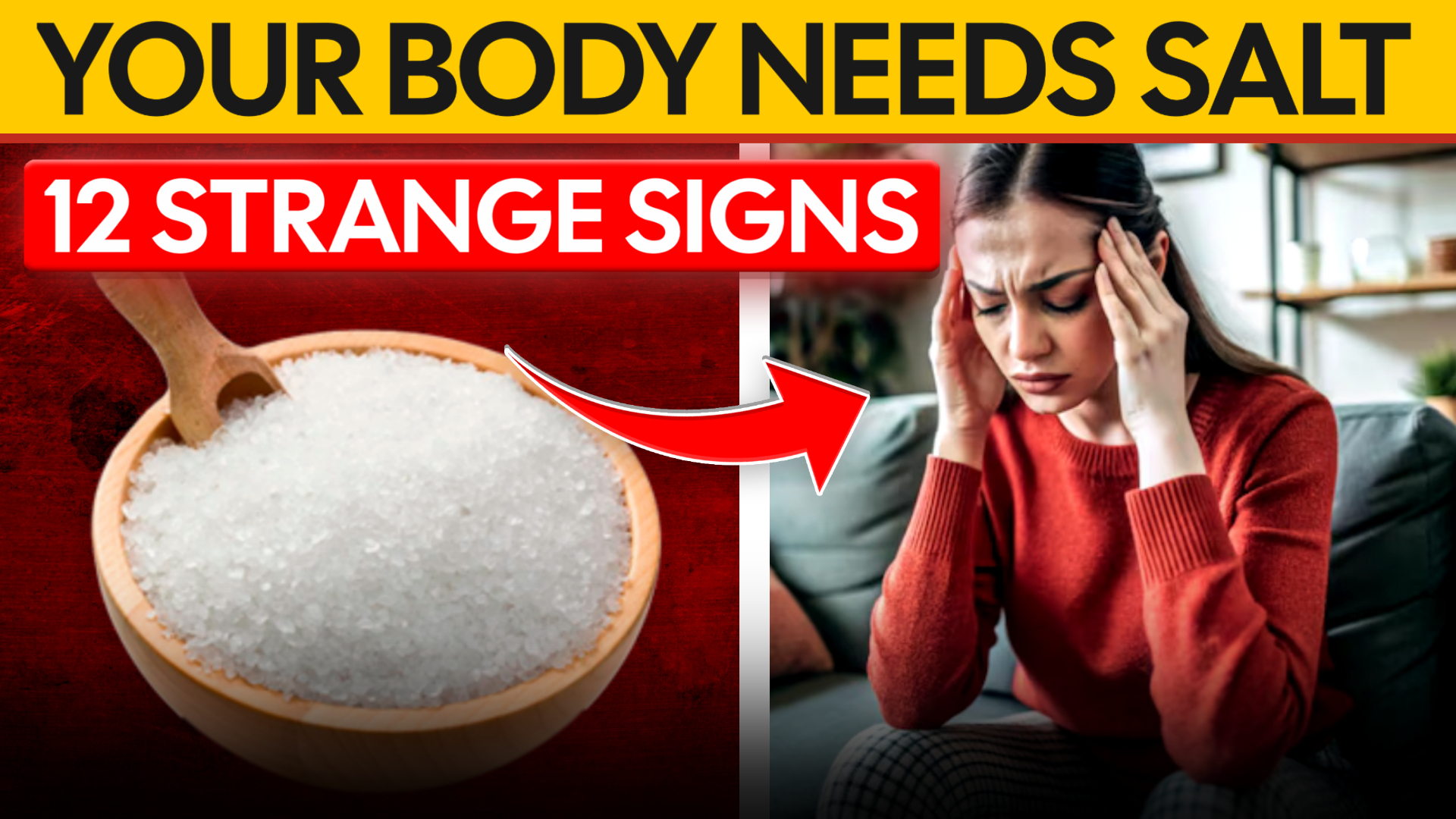
Salt, or sodium chloride, is often vilified in health discussions, with many of us being told to cut back on our salt intake. However, salt plays a crucial role in our bodies, and not getting enough can lead to various health issues. While excessive salt consumption can indeed be harmful, it’s equally important to recognize when our bodies might be craving salt for good reason. In this video, we’ll explore twelve strange signs that your body might be telling you it needs more salt.
1. Persistent Headaches
One of the strangest and most unexpected signs that your body might need more salt is persistent headaches. While we often associate headaches with dehydration, sometimes the issue isn’t just about water, but about electrolyte balance. Salt helps maintain the proper balance of fluids in your body, including in your brain.
When you’re low on salt, the blood volume in your body can decrease. This reduction in blood volume can lead to less oxygen reaching your brain, which in turn can cause headaches. These headaches might feel different from tension headaches or migraines. They often present as a dull, persistent ache rather than a sharp or throbbing pain.
2. Intense Cravings for Salty Foods
While food cravings are often associated with nutrient deficiencies, we tend to think of them in terms of vitamins and minerals, not salt. However, intense cravings for salty foods can be one of the most direct signs that your body needs more sodium.
These cravings might manifest as an overwhelming desire for foods like potato chips, pretzels, or even just a desire to add extra salt to your meals. You might find yourself reaching for the salt shaker more often than usual or suddenly loving foods you previously found too salty.
3. Muscle Cramps and Spasms
Unexpected muscle cramps or spasms, especially at night or after exercise, could be a sign that your body is low on salt. Sodium plays a crucial role in muscle function, helping to regulate muscle contractions through its effect on nerve signaling.
When your sodium levels are low, it can disrupt the delicate balance of minerals in your body, including magnesium and potassium. This imbalance can lead to muscle cramps, particularly in the legs, feet, or abdomen. You might experience sudden, sharp pains or involuntary muscle movements that can be quite uncomfortable.
4. Dizziness or Feeling Lightheaded
Feeling dizzy or lightheaded, especially when standing up quickly, can be another strange sign that your body needs more salt. This symptom is closely related to blood pressure and blood volume, both of which are influenced by your sodium levels.
5. Difficulty Concentrating or Brain Fog
While we often associate difficulty concentrating or “brain fog” with lack of sleep or stress, it can also be a sign that your body needs more salt. Sodium plays a crucial role in cognitive function, helping to regulate nerve signals in the brain.
When your sodium levels are low, it can affect your brain’s ability to send and receive signals efficiently. This can manifest as difficulty focusing, trouble remembering things, or a general feeling of mental sluggishness. You might find it harder than usual to complete tasks, follow conversations, or recall information.
6. Excessive Sweating or Lack of Sweating
Sweating is your body’s natural way of cooling itself, and salt plays a crucial role in this process. Interestingly, both excessive sweating and a lack of sweating can be signs that your body needs more salt.
If you find yourself sweating more than usual, especially if your sweat tastes particularly salty, it could be a sign that your body is trying to conserve sodium by reducing the amount lost through sweat. This increased saltiness in your sweat might leave white stains on your clothes after exercising.
7. Irregular Heartbeat or Heart Palpitations
One of the more alarming signs that your body might need more salt is experiencing an irregular heartbeat or heart palpitations. While this symptom can be caused by many factors and should always be evaluated by a medical professional, it can sometimes be related to low sodium levels.
Sodium plays a crucial role in regulating your heartbeat. It helps maintain the proper balance of fluids inside and outside of your body’s cells, which is essential for normal heart function. When your sodium levels are low, it can disrupt this balance and potentially lead to heart rhythm irregularities.
8. Nausea and Vomiting
Nausea and vomiting might not be the first things you associate with a need for salt, but they can indeed be signs of low sodium levels, especially if they occur alongside other symptoms we’ve discussed.
When your body’s sodium levels drop too low, it can affect your digestive system. You might experience feelings of nausea, sometimes accompanied by vomiting. This can create a vicious cycle, as vomiting can further deplete your body’s sodium levels.
9. Muscle Weakness or Fatigue
Feeling unusually weak or tired, especially if it’s a persistent feeling that doesn’t improve with rest, could be a sign that your body needs more salt. Sodium plays a crucial role in muscle function and energy production in your cells.
When your sodium levels are low, your muscles may not function as efficiently as they should. This can lead to feelings of weakness or fatigue, even when performing tasks that wouldn’t normally tire you out. You might find yourself struggling to lift objects that you could usually manage with ease, or feeling exhausted after minimal physical activity.
10. Decreased Urine Output
While we often focus on drinking enough water for proper hydration, we sometimes forget that proper fluid balance in our bodies also depends on electrolytes like sodium. One strange sign that your body might need more salt is a noticeable decrease in how often you need to urinate.
Sodium helps regulate fluid balance in your body, influencing how much water your kidneys retain or excrete. When your sodium levels are low, your body may retain more water to maintain the proper balance of sodium in your blood. This can lead to decreased urine output.
11. Irritability or Mood Changes
Believe it or not, your mood can be affected by your sodium levels. If you find yourself feeling unusually irritable, anxious, or experiencing mood swings without an apparent reason, it could be a sign that your body needs more salt.
Sodium plays a role in the function of neurotransmitters, the chemical messengers in your brain. When your sodium levels are imbalanced, it can affect these neurotransmitters, potentially leading to changes in mood and behavior.
12. Poor Sleep Quality
The last strange sign that your body might need more salt is poor sleep quality. While we often associate sleep problems with factors like stress, caffeine intake, or blue light exposure, sodium levels can also play a role in how well you sleep.
Sodium helps regulate many of the body’s processes, including your sleep-wake cycle. When your sodium levels are low, it can disrupt this cycle, potentially leading to difficulty falling asleep, frequent wake-ups during the night, or feeling unrefreshed even after a full night’s sleep.
Conclusion
In conclusion, while it’s true that many of us consume too much salt, it’s equally important to recognize that some people might not be getting enough. The signs that your body needs more salt can be subtle and easily mistaken for other issues. If you’re experiencing several of these symptoms, especially if they’re persistent or severe, it’s worth discussing your salt intake with a healthcare provider.